Verrucae Treatments
Professional care for persistent or uncomfortable verrucae or warts.
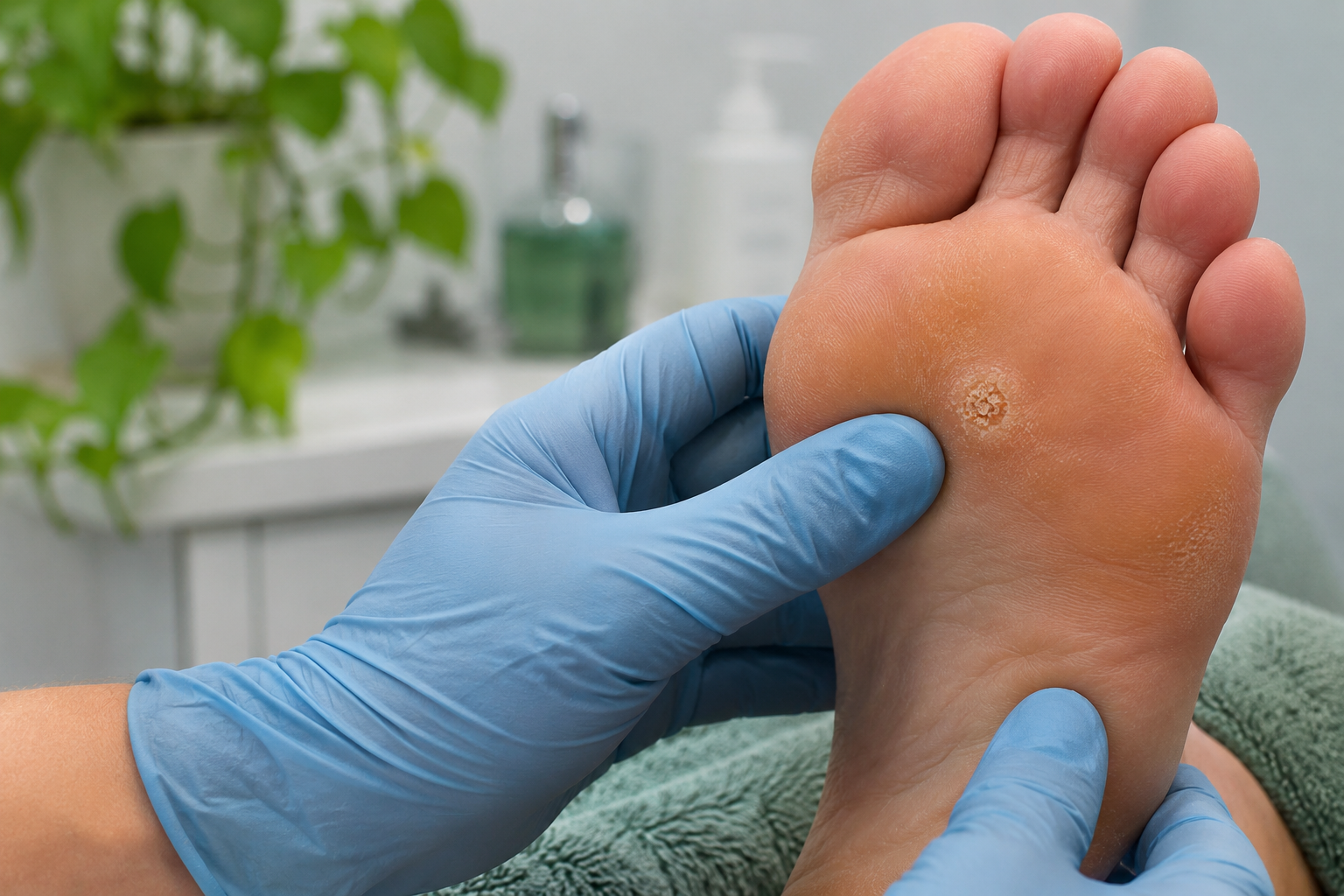
Verrucae also known are warts, which are common viral skin infections caused by the human papillomavirus (HPV). They may occur individually or in clusters.
Verrucae do not always need treatment, in many cases they will self-resolve, however this can take up to two years in children and up to ten years in adults. However, some can persist for longer. Frequently they can become painful, particularly when walking or standing.
In some cases people prefer to have their warts treated, especially if they are causing embarrassment or discomfort At Salisbury Courtyard Clinic, we offer professional assessment and treatment options for troublesome verrucae, helping you decide whether treatment is appropriate. Currently we offer both Plasma treatment and Cryotherapy for verrucae. Please scroll down to read more about our treatments.
Not sure which treatment to choose?
Don't worry — we don't expect you to know which treatment is most suitable. Your initial appointment includes a full assessment and, where appropriate, your first treatment, whether that's cryotherapy or plasma pen. Both options are included in the same appointment fee, so there's no need to decide before booking.
Understanding Verrucae/Warts
What are Verrucae
Verrucae are viral skin infections. They commonly develop on the soles of the feet and may appear individually or in clusters. Many disappear naturally, but some persist or become painful.
Diagnosis
We examine the affected area to confirm whether the lesion is a verruca and assess its size, location and symptoms. We'll discuss whether treatment is necessary and which options may be suitable..

Treatment Options
We offer professional treatment options for persistent or uncomfortable verrucae. The most appropriate approach will depend on your individual circumstances. More than one treatment session may be required.
Aftercare
You'll receive advice on caring for the treated area, what to expect during healing and when further treatment may be needed. Results vary, and complete clearance cannot be guaranteed.
Our Verrucae Treatments
Two different approaches, with treatment selected following a professional assessment
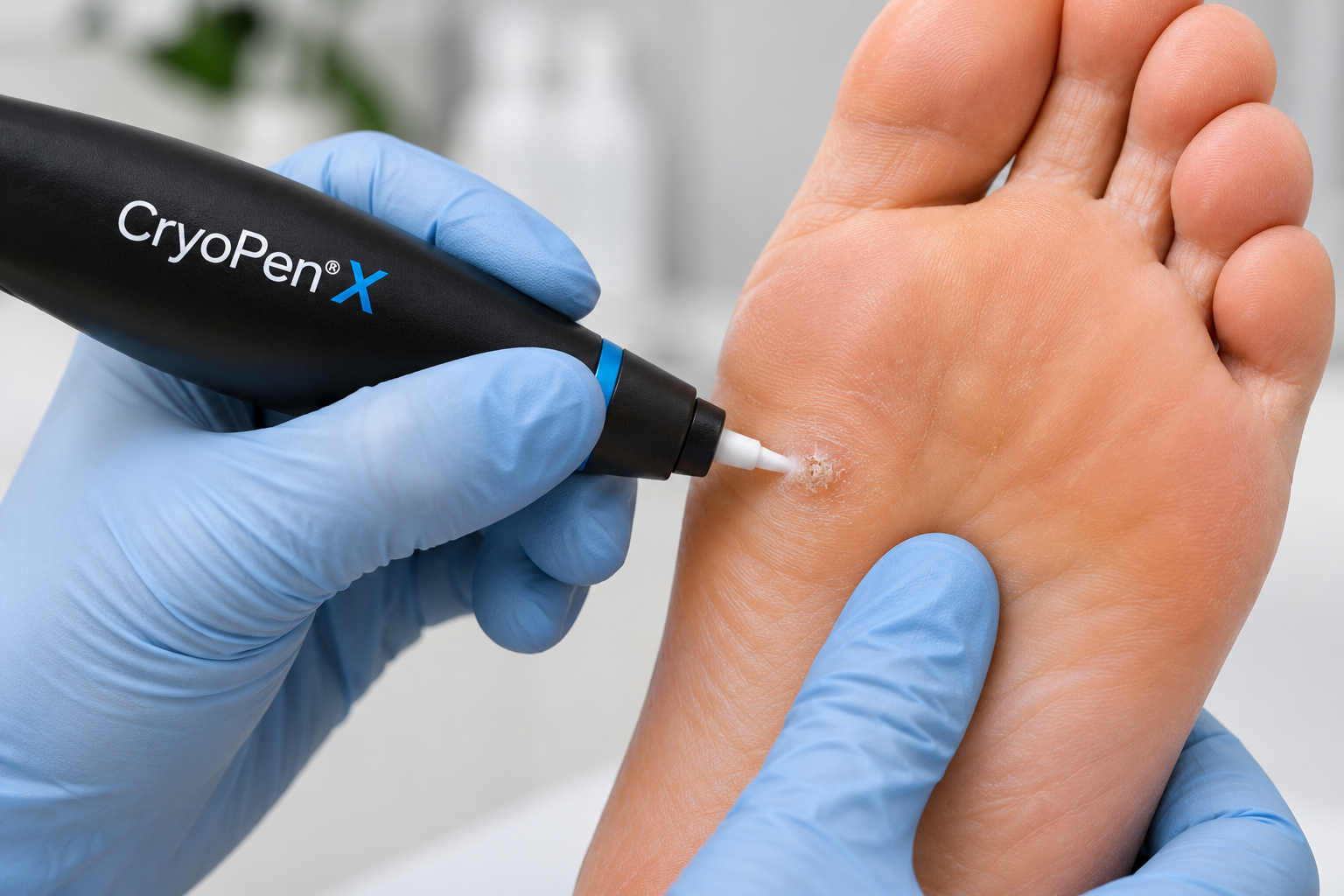
Cryotherapy
Freezing treatment
Cryotherapy uses extremely cold temperatures to freeze the verruca tissue. The ultra-cold temperature rapidly freezes the water inside the wart's cells, causing ice crystals to form. This expansion destroys the abnormal virus-infected tissue being treated.
What to expect
A freeze-thaw technique is used. Two short freezing applications are repeated after a 30 second interval between them. The treatment may cause some stinging or discomfort; and the area may become tender or develop a blister afterwards.
Some post op dressings may be needed.
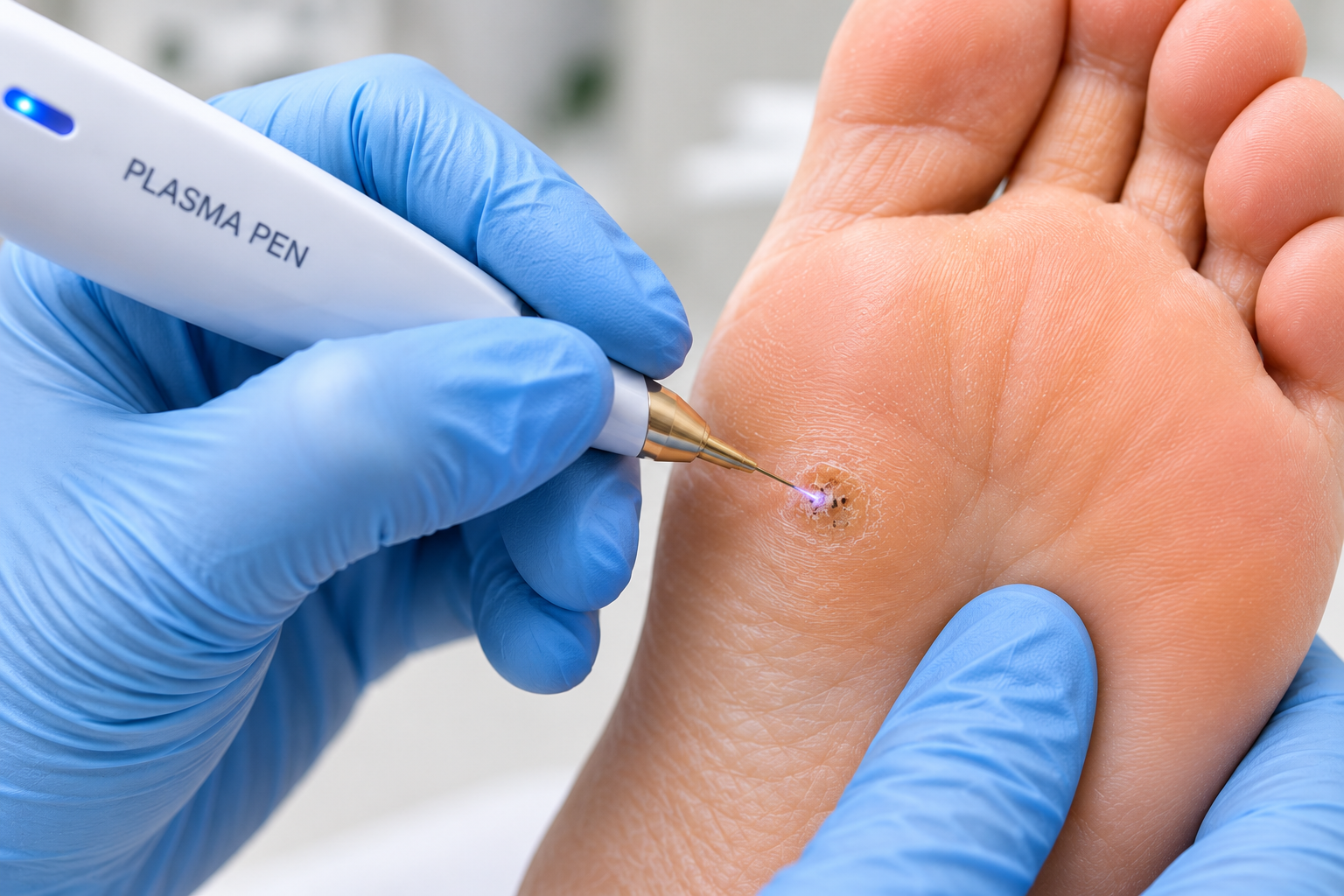
Plasma Sublimation
Vaporisation treatment
Sublimation uses controlled plasma energy to vaporise the verrucae tissue. The device delivers a targeted, high plasma arc to the area being treated, which vaporises the wart tissue without transferring heat into surrounding healthy skin.
What to expect
The device ionises gases in the air between its tip and the skin, creating a micro-plasma arc. This turns the solid, virus-infected skin cells directly into gas (sublimation), instantly dehydrating and destroying the wart tissue.
Post op dressings are usually not needed.
Which Treatment Is Right for Me?
You don't need to decide before booking. At your initial appointment, we'll assess your verruca, explain the available options and recommend the most appropriate treatment for you. But you may find it useful to read the comparison chart below.
Treatment Comparison Chart
-
Method
CRYOTHERAPY
Extreme cold.
Guaranteed resolution - NoPLASMA
Localised vaporisation
Guaranteed resolution - No -
Preparation
CRYOTHERAPY
No preparation
-PLASMA
No swimming or soaking in the bath on the day of your appointment
-
Feels Like?
CRYOTHERAPY
Freezing or stinging sensation
-PLASMA
From zero pain to mild pinching sensation
-
Afterwards
CRYOTHERAPY
Tenderness & possible blister
Dressings may be neededPLASMA
Not tender, black scab
No dressings needed -
Treatment plan
CRYOTHERAPY
Three sessions, four weeks apart
Then six month interval recommendedPLASMA
Four to six sessions, four weeks apart
Then six month interval recommended -
Risks
CRYOTHERAPY
Pigmentary changes
Nerve damagePLASMA
None known
-